TOY WARS
- 4.1
- Rating
- 10.00M
- Installs
- Free
- Price
 Analysis by App-foxy
I spent time with TOY WARS as a mobile strategy game, paying particular attention to how comfortably it works in different situations and for different kinds of players. Its central idea is easy to understand: assemble a toy army, make tactical decisions, and try to control the battlefield. That simple framing makes it approachable, but the experience becomes more demanding once several decisions compete for attention at the same time.
Developed by Volcano Force, the game is free to start and fits the familiar pick-up-and-play style of mobile strategy. It has reached over 10 million installs and holds a 4.1 average from around 699 thousand ratings, so it is clearly not an obscure experiment. I found that its strongest quality is the way it turns short sessions into small planning exercises. Its weakest quality is that the same visual activity and progression pressure can make the game less comfortable for people who need a slower, calmer, or more predictable interface.
How TOY WARS feels to read, control, and return to
I find TOY WARS easiest to approach when I treat each session as a chance to make a few deliberate decisions, not as something to rush through whenever I have a spare hand. Its toy-army premise makes the battlefield feel less intimidating, while the strategy still rewards a moment spent taking stock. That balance shapes how I read the screen, choose my actions, and decide when to come back.
You May Also Like

 Blood Strike: 2.5 Anniversary
Blood Strike’s Loadouts Turn Every Drop Into a Tactical Gamble
A close look at Blood Strike’s custom loadouts: how fast access to signature weapons reshapes its battle royale rhythm, rewards preparation, and narrows the gap between fights.

 Pandora - Music & Podcasts
Pandora’s Music Is Easy to Start, but Harder to Recover
Pandora’s strength is its low-effort path from a seed to a station. Its weak spot is how much confidence it asks you to place in connection, setup, and quiet recovery.

 8 Ball Pool
 Is Built on Rivalries, Rematches, and Routine
A close look at the rivalries, rematches, shared routines, and unanswered safety questions that turn a quick pool match into a persistent mobile community.

 Samsung Music
’s Quiet Strength Is Playing What You Already Own
Its reach comes less from spectacle than from dependable access to a personal library. That simplicity is both the app’s strongest retention engine and its ceiling.

 AccuWeather: Weather Radar
AccuWeather Review: A Quick, Clear Forecast for Everyday Decisions
For everyday plans, the best forecast is the one you can understand quickly. AccuWeather makes rain timing, radar, and local conditions easy to act on, with a few trade-offs.

 Hill Climb Racing
Why Hill Climb Racing Still Turns Crashes Into One More Run
A tiny car, a bumpy hill and one more upgrade: Hill Climb Racing keeps resurfacing because its simple chaos makes every near-miss feel personal.
More From Our News Desk
View All News


Readability and navigation during a battle
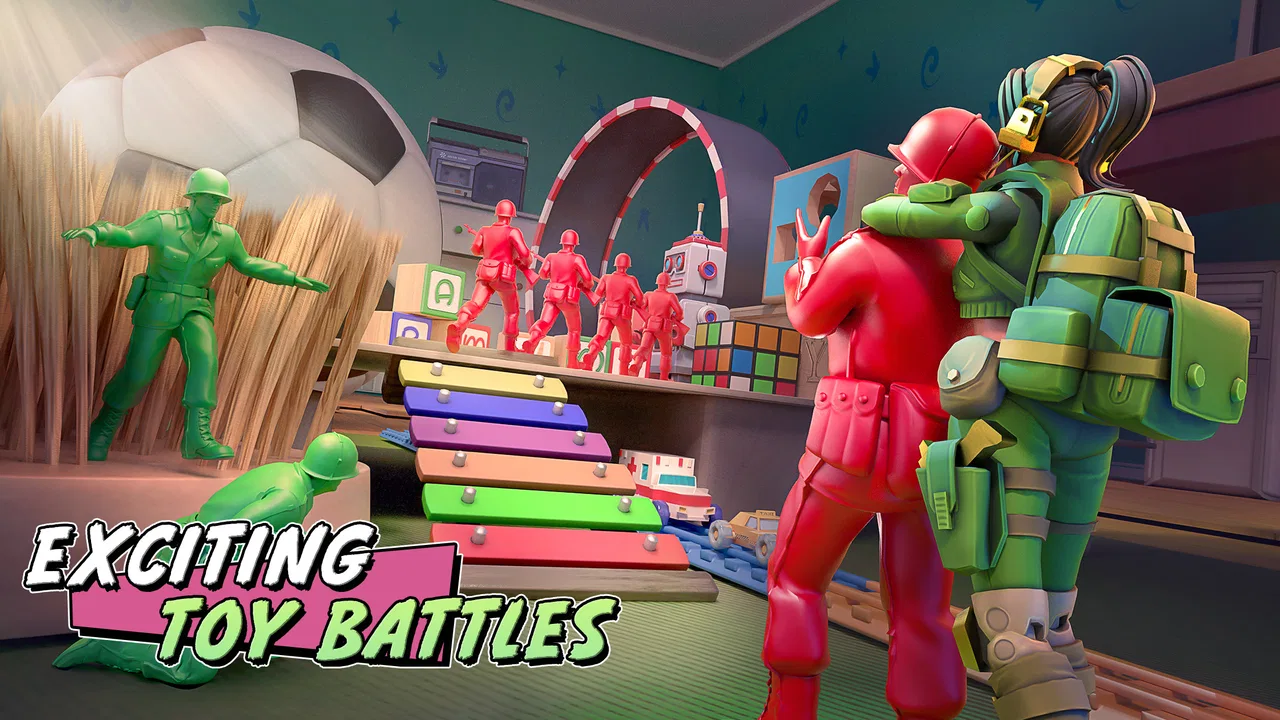
The toy-themed presentation gives the game an immediate identity. Units and battlefield elements are easier to approach when they look playful rather than realistic, and I never felt that the basic premise required a long explanation. The first moments are therefore less intimidating than in strategy games that begin with a dense map, a large technology tree, and several unfamiliar resource types.
That does not mean every screen is equally effortless. Strategy games ask the player to distinguish between what can be selected, what is merely decorative, and what is showing a temporary state. In TOY WARS, I had to slow down whenever the battlefield became busy, especially when I was trying to judge several toy units at once. A quick glance is enough for the broad situation, but careful play depends on noticing the small differences between an available action and an action that must wait.
My practical advice is to avoid treating every round as a race. I get better results when I first scan the whole battlefield, identify the immediate threat, and only then start tapping through commands. That habit is useful for anyone who finds rapid visual switching tiring. It also improves strategy, because an early reaction is not always the best reaction.
The navigation is most comfortable when I already know what I want to do. Returning to a familiar routine—checking the army, reviewing the current objective, and then entering a battle—feels much easier than learning several systems simultaneously. New players should give themselves a few sessions to build that routine rather than judging the game after the first few minutes.
There is also a useful distinction between understanding the game and reading every detail. I could understand the general goal quickly, but making consistently good decisions requires more concentration. That difference matters for players with dyslexia, attention difficulties, or limited patience for crowded interfaces. The game can be approachable at the strategic level while still asking for effort at the information level.
Motor and sensory considerations
TOY WARS is built around touch interaction, so the physical demand is generally lower than in an action game that expects constant movement, aiming, or rapid combinations. That makes it a more realistic choice for someone who prefers deliberate taps and planning over reflex-heavy play. I appreciated being able to think about the next move instead of relying entirely on speed.
However, deliberate does not always mean low effort. A strategy round can still involve repeated selections, switching attention between units, and correcting a choice before committing to it. Players with hand tremors, joint pain, or difficulty with precise touch may find crowded moments uncomfortable. The toy scale and battlefield activity can also make it harder to identify the exact object to tap when several things are close together.
For that reason, I would play with the device held steadily and avoid very small screens when possible. A larger display gives the battlefield more breathing room, even though it does not change the underlying controls. I also found short sessions more comfortable than trying to push through fatigue. Once concentration drops, mistakes become more likely and the strategic side feels less rewarding.
The sensory profile is similarly mixed. The colorful toy setting feels lighter than a grim military game, which may suit players who dislike realistic violence. At the same time, a bright, active battlefield can still be visually demanding. Anyone sensitive to motion, contrast, or busy screens should test the game in a quiet setting first and keep the session brief until they know how it feels.
I would not describe the game as automatically accessible simply because it uses toys. The theme reduces some emotional barriers, but it does not remove the need to process visual information. That is an important trade-off: the presentation is friendly, while the tactical layer can become intense when several events compete for attention.
Situational access in everyday play
The best everyday use case is a short break when I have enough attention to plan but not enough time for a long console session. I can imagine playing during a commute stop, between household tasks, or while waiting for an appointment. The game suits those moments better than a strategy title that demands a long uninterrupted campaign, provided I am not trying to play while distracted by conversation or movement around me.
It is less suitable when my phone is being used one-handed in an unstable situation. On a crowded bus, while walking, or while carrying something, I would rather wait. A strategy game punishes half-attention more than a passive puzzle because a missed detail can affect the whole battle. This is a small but important accessibility point: access is not only about whether the controls work, but also whether the surrounding context lets the player understand the result of each action.
Sound is another situational consideration. I often play mobile games with audio reduced or unavailable, and TOY WARS remains understandable when I concentrate on the visual feedback. That makes it practical in a shared room, at work during a break, or in a public place where sound would be inappropriate. Still, playing silently puts more responsibility on the visual presentation, so a busy scene can feel harder to follow than it would in a quiet environment with full attention.
The game is also a reasonable option for players who want strategy without committing to a serious simulation. The toy theme lowers the emotional weight, and the free entry removes the need to decide immediately whether the concept is worth paying for. The important qualification is that free access does not mean the entire experience is free of commercial pressure: optional purchases range from $0.49 to $324.99 per item. I would approach the shop carefully and decide in advance whether I want to spend anything.
That spending range matters especially for younger players and for anyone who finds limited-time offers or progression pressure difficult to ignore. The content rating is Teen, so I would not treat it as an automatic choice for small children simply because the soldiers are toys. Parents should consider whether the child can understand purchases and whether the strategic competition will feel enjoyable rather than stressful.
Where the game asks more from the player
The main barrier is the combination of visual density and decision pressure. A player may understand the objective but still struggle to identify the best next action when multiple units, targets, and status changes appear together. That can affect people with low vision, attention-related difficulties, or slower processing speed. I could work around it by pausing mentally between actions, but that workaround depends on the game giving me enough time to inspect the situation.
Another barrier is learning overhead. The toy army idea is simple, yet strategy games become less simple as the player learns how different choices interact. Someone looking for a completely relaxed experience may find that the colorful style creates expectations the deeper play does not always meet. It is cheerful in appearance, but it still expects planning and accepts that poor decisions have consequences.
Players who need large text, strong contrast, extensive remapping, or very forgiving touch targets should be cautious. I would not choose this game as my first recommendation for someone whose priority is a highly adjustable interface. A slower board game, a turn-based title with more generous controls, or a strategy game built around larger, clearer elements may be a better fit.
There is also a difference between physical accessibility and cognitive accessibility. The game does not demand the same rapid reactions as an action shooter, but the player still has to remember the purpose of different choices and track changes across the battlefield. For me, the cognitive load is manageable in short sessions and more tiring in longer ones. That makes pacing an important part of enjoying it.
The free-to-play structure can become a barrier in a different way. Even when I am interested in the tactics, the presence of optional purchases changes how I think about progress. Players who want a completely self-contained premium experience may prefer to pay once for a game without a shop. By contrast, people who like sampling a game before spending anything may appreciate being able to begin without an upfront price.
How it compares with familiar strategy alternatives
Compared with a traditional turn-based strategy game, TOY WARS feels more immediate and less formal. I do not approach it like a tabletop campaign with a large rulebook and a long-term map. Its toy presentation makes the entry point friendlier, while the mobile format encourages shorter decisions. The trade-off is that players who enjoy deep, carefully explained systems may find it less satisfying than a more deliberate strategy title.
Compared with a real-time action strategy game, it is a better fit for someone who wants to think before acting. I am less dependent on reflexes, but I still need to keep track of what is happening. That makes it a middle ground: calmer than a twitch-focused game, yet more demanding than a simple casual puzzle.
It also differs from purely decorative toy games. The theme is not just a visual skin over a passive collection experience; the battlefield decisions are the reason to keep playing. This is where the game earns its place for me. If I want to make choices, test a plan, and learn from a failed approach, it offers more substance than a game that only asks me to gather items.
On the other hand, players who dislike in-app purchases or who want a predictable progression path may be happier with a paid strategy alternative. The best choice depends on what “casual” means to you. If casual means short and approachable, this game has appeal. If casual means low pressure, minimal menus, and no temptation to spend, another option may be more comfortable.
Who will enjoy it most
I would recommend it to players who like toy-themed worlds but still want genuine tactical decisions. It is especially suitable for someone moving from simple mobile puzzles toward strategy and looking for a less intimidating setting. The free starting point is helpful here because the player can learn whether the battlefield style suits them before committing money.
It can also work well for experienced strategy players who want something lighter between larger games. I would not expect the same scale or seriousness as a dedicated desktop strategy title, but that is part of its usefulness. It gives me a compact way to exercise planning without setting aside an entire evening.
I would suggest skipping it if you need a very quiet interface, dislike managing several visual elements, or want a game with no purchase prompts at all. I would also look elsewhere if your main interest is a story-driven toy adventure rather than battlefield decision-making. The theme may attract you, but the strategy layer is what determines whether you stay.
My final view on inclusive play
TOY WARS is more approachable than its strategy label might suggest, mainly because the toy setting softens the presentation and the touch controls do not revolve around constant reflexes. I found it easiest to enjoy when I played in short, focused sessions, used a stable grip, and gave myself time to scan before selecting an action.
Its inclusive potential has clear limits. Busy scenes, repeated touch decisions, cognitive load, and the free-to-play purchase structure can all create friction. Those issues do not make the game unusable, but they do mean that suitability depends heavily on the player and the setting. Someone who needs extensive interface customization should not assume the friendly art style solves every problem.
The game was released on December 15, 2016, and its current version is 3.292.2, with support beginning at Android 6.0. Those details make it relevant to people using older compatible devices, although the actual comfort of play will still depend on screen size, performance, and personal needs. Its Teen rating is another reminder to consider the player’s age and relationship with in-app spending.
After weighing the strengths and barriers, I see Volcano Force’s game as a solid choice for thoughtful mobile sessions rather than an all-purpose accessible recommendation. Its best feature is the balance between a welcoming toy world and meaningful battlefield planning. Try it if you want strategy that feels lighter than a military simulation, but choose a slower, more adjustable, or one-time-purchase alternative if clarity, calm, and control over the entire experience matter more than the free entry point.
FAQs for TOY WARS
01What is TOY WARS and how does the gameplay work?
TOY WARS is an action-focused game built around battles between toy-like characters, where players typically move through arenas, use different weapons or abilities, and try to defeat opposing players or enemies. From the first matches, the experience is easy to understand, but success depends on learning each character’s strengths, choosing the right equipment, and reacting quickly during chaotic fights.
02Can TOY WARS be played offline, or does it require an internet connection?
The connection requirements may depend on the specific mode available in your version of TOY WARS. Competitive battles, online matchmaking, leaderboards, and other multiplayer features generally require a stable internet connection. Some versions may offer limited offline content, but users should not assume that the complete game works without internet access, especially if progress and rewards are linked to an online account.
03Is TOY WARS free to download, and does it include in-app purchases?
TOY WARS may be available as a free download, but free access does not necessarily mean that every item or feature is unlocked immediately. Games in this style commonly include optional purchases for cosmetic items, currency, upgrades, bundles, or faster progression. Before downloading, parents and players should review the store listing and device purchase settings, since optional spending can affect the overall experience.
04Is TOY WARS suitable for children and younger players?
TOY WARS uses a colorful toy-inspired presentation, but its suitability for children depends on the intensity of the battles, the game’s rating, advertising, chat features, and purchase options. Parents should check the official age classification for their country and review privacy settings before allowing access. If online interaction is available, parental controls are recommended to limit communication and accidental purchases.
05What devices are compatible with TOY WARS, and how much storage does it need?
Compatibility depends on whether you are installing the Android or iOS version, as well as the operating system requirements set by the developer. It is best to check the official store page before downloading because older phones and tablets may not support the latest release. Keep additional free storage available for updates, temporary files, downloaded assets, and possible future content.
Pros
- Quick matches make it easy to play during short breaks.
- Bright toy-themed visuals give the battles a playful personality.
- Different toy weapons encourage varied combat strategies.
- Simple controls are approachable for younger or casual players.
- Unlockable content provides goals beyond the first few matches.
Cons
- Some battles may feel repetitive after extended play sessions.
- Progression can become slower without frequent gameplay.
- Small screens may make precise aiming more difficult.
- The toy theme may not appeal to players seeking realistic combat.
- Performance can vary on older or less powerful devices.

TOY WARS
Gallery